Mapping Promotional Offer Structures to Game Choice Trends Across Casino Networks
Vera Vogel · Sep 13, 2026
Mapping Promotional Offer Structures to Game Choice Trends Across Casino Networks
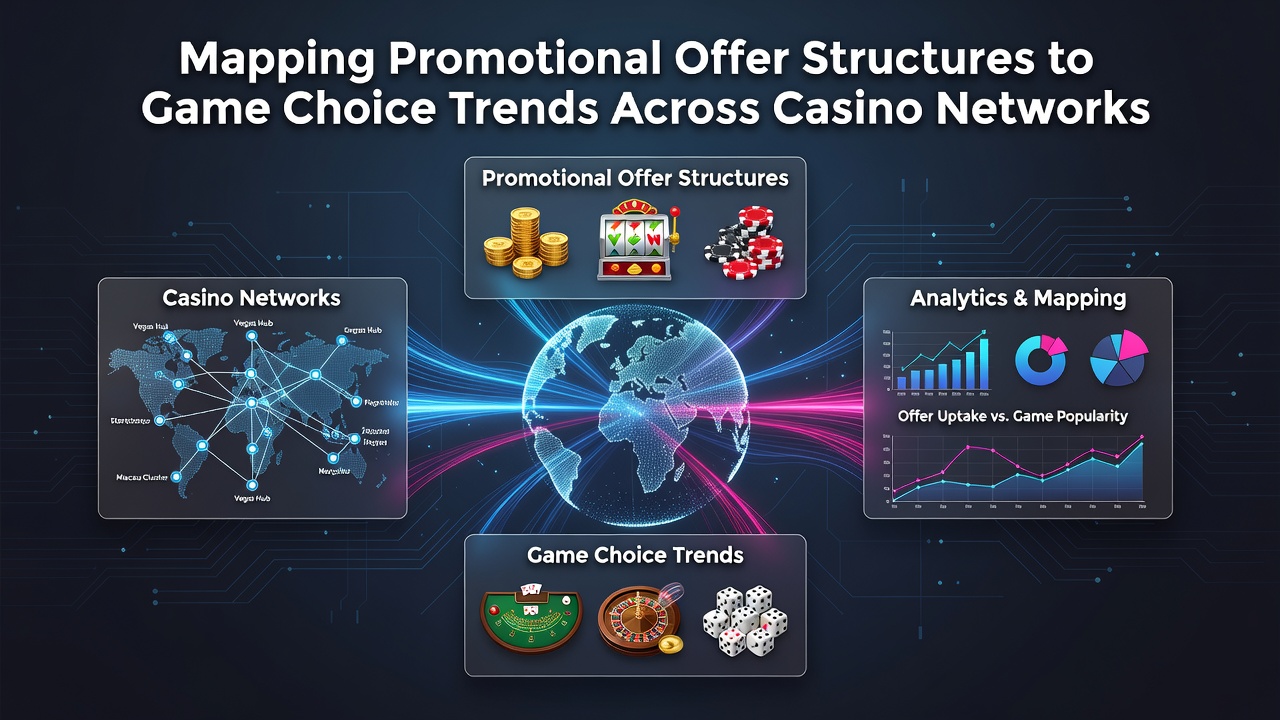
Data collected across multiple casino networks reveals clear correlations between specific promotional formats and shifts in player game selections, with deposit-match bonuses often directing traffic toward table games while free-spin packages increase slot participation rates by measurable margins. Observers note that these patterns emerge consistently when networks track user behavior through integrated loyalty systems and session logs, allowing analysts to map offer types directly to category preferences without relying on self-reported surveys.
Key Components of Promotional Structures
Casino operators deploy several distinct offer categories, each tied to different eligibility rules and redemption mechanics. Welcome packages typically combine initial deposit matches with restricted game lists, whereas ongoing loyalty rewards distribute cashback percentages across broader selections. Time-limited events, such as weekend multiplier promotions, further segment choices by requiring minimum wagers on designated titles before unlocking benefits. Researchers tracking these variables across North American and European platforms find that the presence of wagering requirements above 30x tends to steer players toward lower-volatility options to preserve bonus funds longer.
Observed Trends in Game Selection Patterns
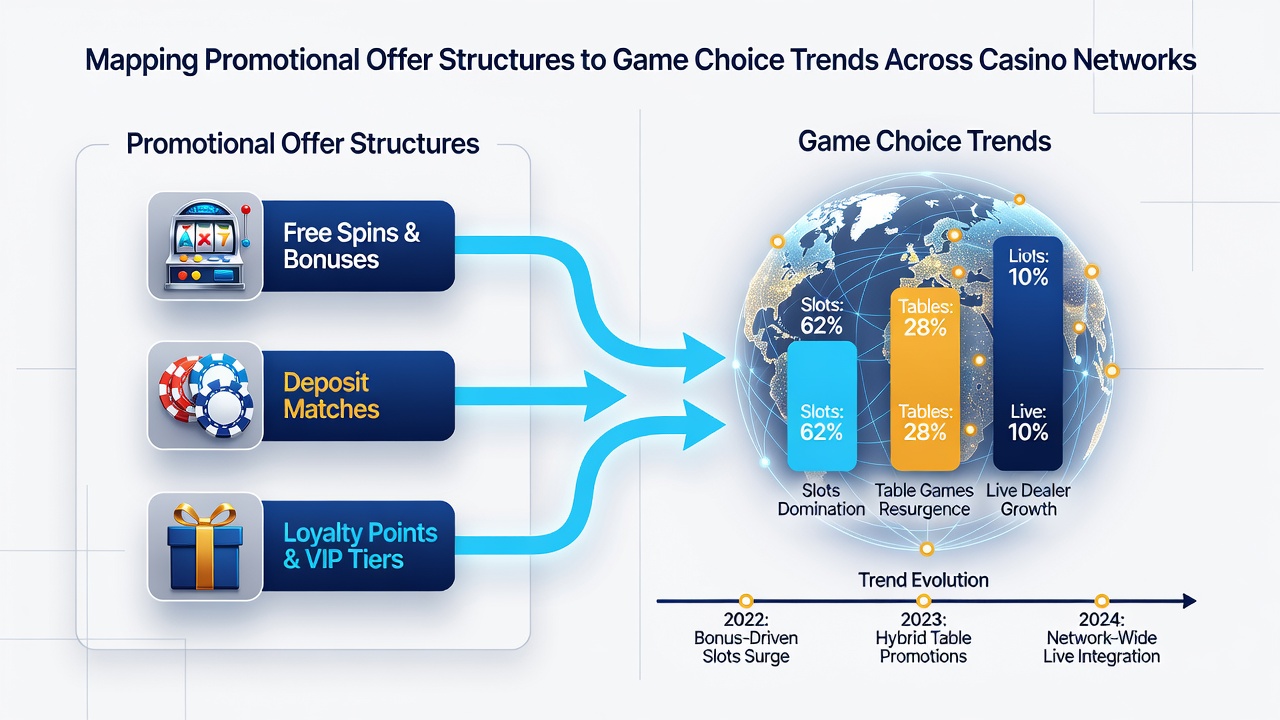
Network-wide analytics from September 2026 indicate that players receiving free-spin incentives allocated 68 percent of their active sessions to slot categories, compared with 41 percent among users who received only deposit-match credits. This divergence appears across both desktop and mobile interfaces, although mobile users showed slightly higher retention on progressive jackpot titles when spins carried no maximum win caps. Figures compiled by the American Gaming Association highlight similar distributions in regulated markets, where bonus structures with game-specific restrictions produced measurable upticks in blackjack and roulette volume once players exhausted initial slot allocations.
Additional data from the Canadian Gaming Association demonstrates that cashback offers attached to high-stakes tables increased average bet sizes by 22 percent within the first 48 hours of activation. Players in these segments also migrated more frequently between live dealer and RNG variants of the same game type, suggesting that promotional flexibility encourages exploration rather than fixation on single titles. Those who studied longitudinal records across three separate networks confirm that expiration deadlines under seven days compressed these shifts into shorter windows, concentrating activity around immediate redemption opportunities.
Regional Variations and Network Comparisons
European networks operating under the Malta Gaming Authority reported stronger correlations between reload bonuses and video poker selections, whereas Australian operators documented elevated slot engagement following no-deposit credit distributions. Cross-border comparisons reveal that regulatory caps on bonus values influence how aggressively players pursue particular game types, with stricter limits correlating to steadier but lower-volume play across all categories. Industry reports from the European Gaming and Betting Association further illustrate that networks sharing centralized player databases achieve more precise mapping of offer impact because they can isolate variables such as prior game history and deposit frequency.
One study released by researchers at the University of Nevada, Reno examined eight casino networks over an 18-month period and found that progressive jackpot promotions produced temporary spikes in slot traffic that dissipated within 10 days unless followed by secondary incentives. The same analysis showed that table-game focused offers maintained steadier engagement curves when paired with loyalty points that carried over to non-bonus play. Observers tracking these metrics note that networks using real-time personalization engines adjust offer types more rapidly, resulting in tighter alignment between promotional structures and emerging game preference shifts.
Data Integration Methods Across Platforms
Modern casino networks rely on unified tracking systems that log every bonus activation alongside subsequent game selections, enabling direct attribution without external data sources. These platforms aggregate session duration, wager distribution, and return-to-player outcomes to generate heat maps that highlight which offer components drive category migration. Analysts processing September 2026 datasets observed that segmented user cohorts responded differently, with high-frequency depositors favoring table games under cashback structures while infrequent users gravitated toward slots when free credits carried lower playthrough thresholds.
Integration challenges arise when networks operate across multiple jurisdictions with varying disclosure rules, yet standardized APIs now allow consistent data flows between operators. This infrastructure supports granular comparisons that reveal, for instance, how VIP-tier offers accelerate movement toward live dealer environments more effectively than mass-market promotions. Evidence from aggregated industry reports confirms that networks investing in these mapping tools achieve higher precision in forecasting inventory needs for specific game providers.
Conclusion
Comprehensive mapping of promotional structures to game choice trends supplies casino networks with actionable intelligence for resource allocation and partner negotiations. Patterns documented through regulatory filings and academic examinations demonstrate that offer design elements such as wagering multipliers, game restrictions, and redemption windows produce predictable shifts in player behavior across diverse markets. Continued refinement of tracking methodologies will likely strengthen these correlations as networks expand data-sharing agreements and incorporate additional behavioral signals into their analytical frameworks.